US Iran Conflict Polymer Supply Chain – The 2026 Crisis Reshaping Global Plastics
The plastic industry doesn’t run on plastic — it runs on oil. The ongoing US Iran conflict polymer supply chain disruption has turned this truth into a painful reality for manufacturers worldwide.
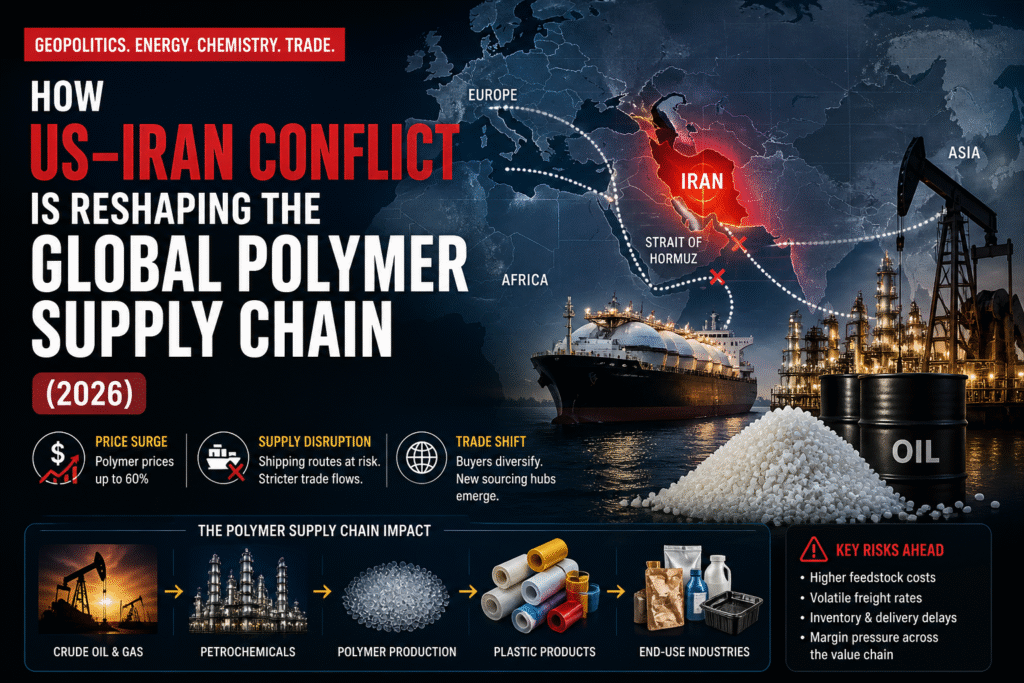
Since late February 2026, escalation in the US-Iran conflict has severely restricted shipping through the Strait of Hormuz, which handles approximately 20% of global oil supply and significant volumes of naphtha and petrochemical feedstocks. This has triggered widespread shortages, logistics breakdowns, and sharp price surges across polymers like polyethylene (PE), polypropylene (PP), and polyethylene terephthalate (PET).
For plastic manufacturers, processors, packaging companies, automotive OEMs, and petrochemical stakeholders, the US Iran conflict polymer supply chain crisis is no longer a distant geopolitical event — it is a daily operational and margin challenge.
The Oil–Polymer Connection in the US Iran Conflict Polymer Supply Chain
Polymers are downstream derivatives of petrochemical feedstocks. Naphtha (from crude oil) serves as the primary feedstock for steam crackers in Asia and Europe, producing ethylene and propylene — the building blocks for PE and PP. Ethane and propane dominate in regions with abundant natural gas.
Feedstock costs typically account for 60–70% of polymer production expenses. When disruptions hit the US Iran conflict polymer supply chain, even moderate crude price spikes amplify through the value chain. The 2026 conflict has disrupted nearly 1.2 million barrels per day of naphtha exports, tightening global supply and pushing polymer prices to four-year highs.
Here’s what matters: A physical shortage combined with rerouting costs creates a multiplier effect far beyond normal oil volatility.
Current Scenario – What’s Happening in the 2026 US Iran Conflict Polymer Supply Chain
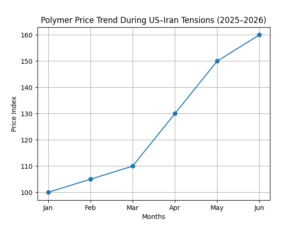 The conflict has effectively choked tanker traffic through the Strait of Hormuz. Insurance premiums have tripled, many vessels have rerouted via the Cape of Good Hope (adding 12–18 days), and several Middle Eastern petrochemical complexes have reduced throughput or declared force majeure.
Over 30 force majeure events were reported in polyolefins by April 2026. Asian steam crackers, which source over 60% of their naphtha from the Middle East, have cut operating rates. European and North American producers face higher energy and alternative feedstock costs, while global inventories tighten rapidly.
Impact on Global Polymer Supply Chain Due to US Iran Conflict
Raw Material Shortages
Naphtha availability has plummeted, leading to widespread allocation and production cuts. Middle Eastern suppliers diverted volumes domestically, leaving importers — especially in Asia — short on key grades.
Polymer Price Increase 2026
PE and PP prices have surged 50–70% in many markets since the conflict intensified, with some monthly hikes reaching $300–700 per tonne. PET has followed due to higher paraxylene and energy costs. In India, domestic prices jumped ₹25,000–35,000 per MT in compressed periods, with cumulative increases of 49–78% reported for key resins.
Logistics and Petrochemical Supply Chain Disruption
Freight rates for chemical tankers have doubled or tripled. War-risk surcharges and extended transit times have disrupted just-in-time models common in packaging and automotive sectors. Supplier uncertainty has led to stricter payment terms, including letters of credit and prepayments.
Industry-Wise Impact of the US Iran Conflict Polymer Supply Chain Crisis
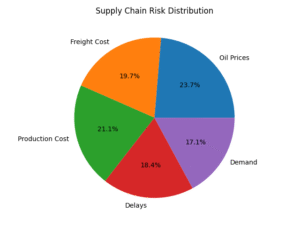 Packaging: Converters face 30–50% cost pass-through challenges as brands resist hikes. Many are accelerating lightweighting and mono-material designs.
Automotive & OEMs: PP compounds and engineering polymers rose over 55%. EV lightweighting programs face delays amid higher resin costs.
FMCG and Medical: Critical applications are building larger safety stocks, further tightening supply. Recycled content targets are rising to hedge virgin polymer volatility.
Impact on Indian Plastic Industry from US Iran Conflict Polymer Supply Chain
India’s large downstream conversion industry, consuming 15–18 million tonnes of polymers annually, is particularly vulnerable due to heavy reliance on Middle Eastern imports. The GCC region supplied about 62% of India’s PE imports and 51% of PP imports in recent years.
Domestic producers like Reliance Industries, IOCL, and GAIL have maximized output, but cannot fully bridge the gap for specialty grades. Non-integrated processors in Maharashtra (including Pune), Gujarat, and Tamil Nadu — the backbone of flexible packaging, pipes, and molded goods — are hardest hit.
Key pressures include:
- Margin squeeze: CareEdge estimates operating margins in plastic packaging could shrink 3–5% by H1 FY27 if crude remains elevated. Many converters have passed on only 30–50% of cost increases.
- Supply shortages: Force majeure from Gulf suppliers and domestic rate adjustments have caused grade-specific shortages.
- Logistics costs: Rerouting and insurance have pushed delivered prices higher.
- Export challenges: Finished plastic goods from India have become less competitive against Southeast Asian players.
SMEs, operating on thin 5–10% margins, face production cuts, delayed expansions, and working capital strain. Clusters report 20–30% order volume drops as end-users delay purchases.
This US Iran conflict polymer supply chain shock has exposed India’s structural dependence on imported feedstocks and resins, accelerating calls for diversification.
Strategic Shifts Triggered by the US Iran Conflict Polymer Supply Chain Disruption
Industry leaders are responding with accelerated adaptation:
- Growth in recycling: Mechanical and chemical recycling capacities are being fast-tracked to reduce virgin resin dependence.
- Bio-based polymers: PLA, bio-PE, and PHA projects are scaling faster as the price gap with fossil-based options narrows.
Readmore – Self healing polymer
- Localization and diversification: Companies are securing long-term contracts from US, Canadian, and domestic sources while building multi-origin procurement systems.
- Risk management: Larger safety stocks for critical grades and digital tools for real-time market scanning have become standard.
Future Outlook for the US Iran Conflict Polymer Supply Chain (2026–2030)
Short-term stabilization hinges on de-escalation and reopening secure shipping lanes. Even with partial relief, full recovery of petrochemical flows may take months due to insurance overhang and infrastructure damage.
Longer term, expect permanent changes: greater feedstock diversification, higher investment in circular economy infrastructure, and a shift toward regionally balanced supply chains for strategic applications. Polymer prices may moderate 20–35% from peaks, but a full return to pre-2026 levels is unlikely.
Readmore – Future of Injection molding
Conclusion – Turning Crisis into Opportunity in the US Iran Conflict Polymer Supply Chain
The US Iran conflict polymer supply chain disruption of 2026 has delivered a clear message: single-point dependencies in global energy and petrochemical trade carry unacceptable risks.
While the immediate effects — naphtha shortages, doubled freight, and 35–70% polymer price surges — create real pain, they also open doors for innovation in recycling, bio-materials, and resilient sourcing.
Companies that act decisively today will build stronger, more competitive positions tomorrow. The plastics industry has proven its adaptability many times. The winners in this cycle will be those who treat the current US Iran conflict polymer supply chain challenges as a catalyst for long-term transformation.