

What Are Self-Healing Polymers?
Understanding Self-Healing Polymers: The Basics
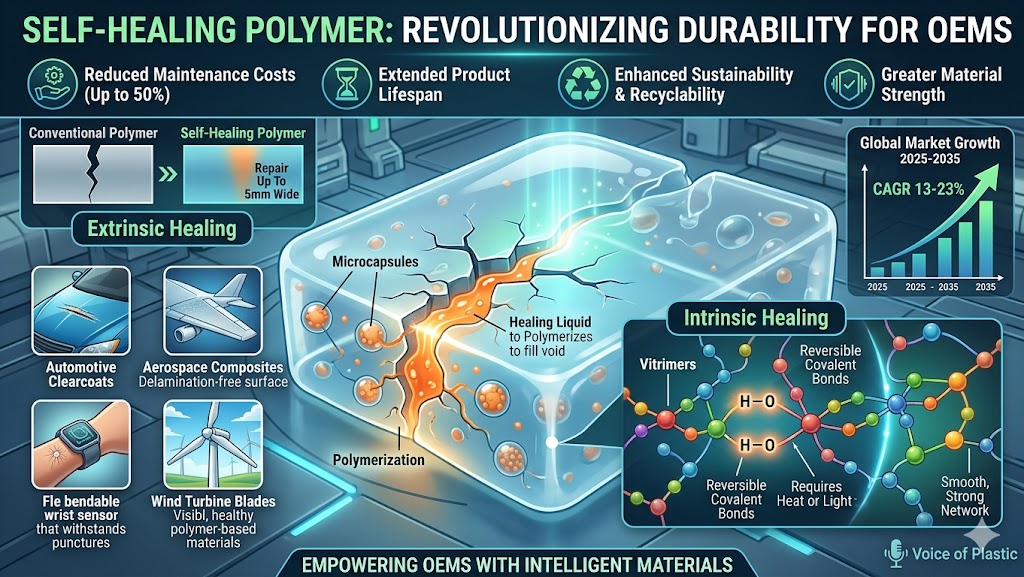
Self-healing polymers are advanced materials designed to mimic biological healing processes, such as how human skin repairs cuts. At their core, these polymers incorporate mechanisms that detect and mend damage like cracks, scratches, or fractures autonomously. This capability addresses a longstanding challenge in traditional polymers: vulnerability to wear and tear, which often leads to premature failure and costly replacements for OEMs.
The concept isn’t entirely new, but advancements in nanotechnology and material engineering have propelled self-healing polymers from laboratory curiosities to viable commercial solutions. For OEMs, this means integrating materials that maintain structural integrity over extended periods, even in harsh environments. Key to their appeal is the balance between mechanical strength and repair efficiency, ensuring that durability isn’t compromised for self-healing functionality.
Technical Deep Dive: How Self-Healing Mechanisms Work
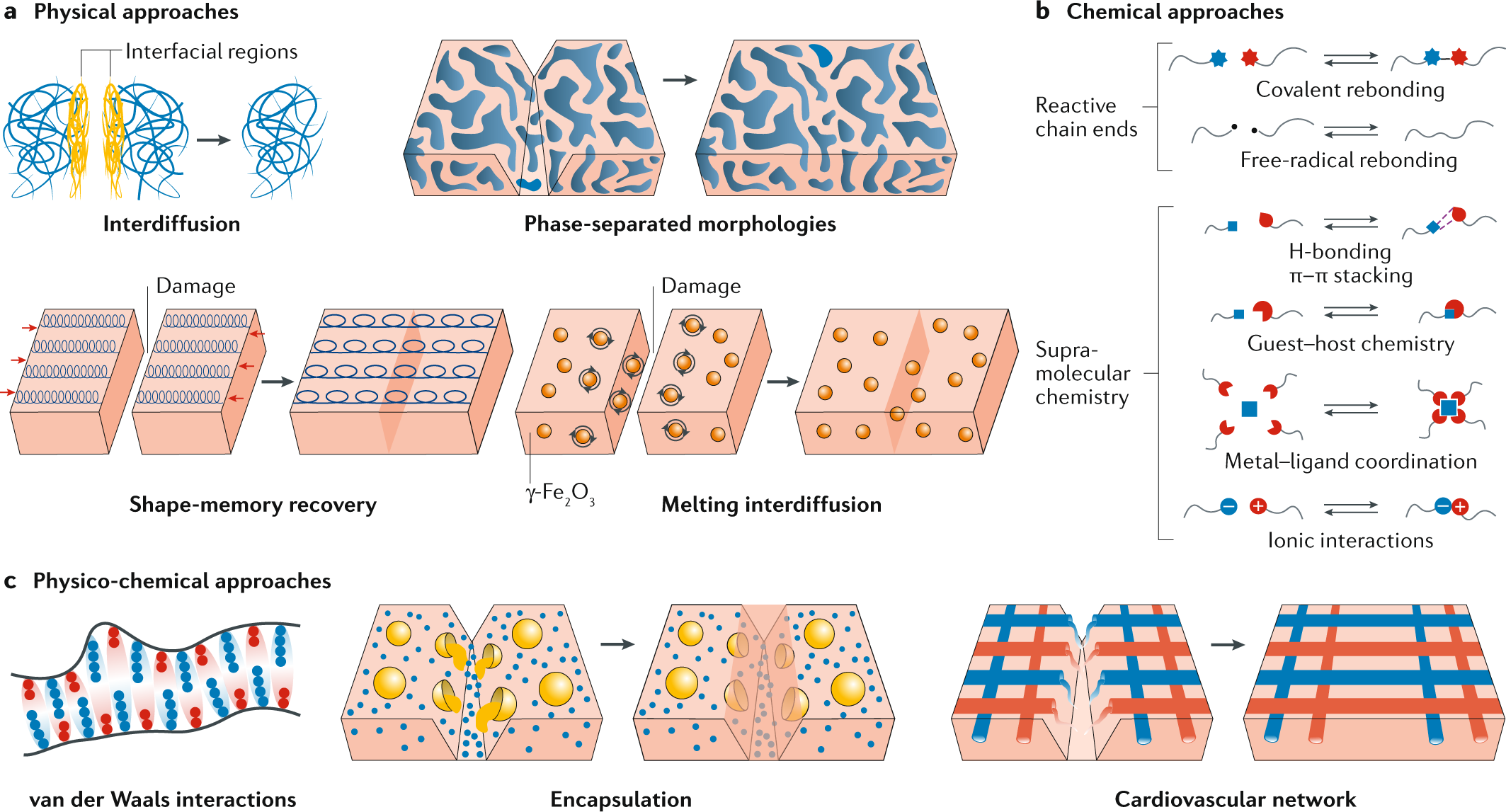
To appreciate the breakthroughs, it’s essential to understand the underlying mechanisms of self-healing polymers. These can be broadly categorized into extrinsic and intrinsic approaches, each with unique technical advantages for enhancing material durability.
Extrinsic Self-Healing
Extrinsic methods rely on embedded healing agents released upon damage. The most common technique is microencapsulation, where microscopic capsules containing liquid healing agents (like monomers or catalysts) are dispersed within the polymer matrix. When a crack forms, it ruptures these capsules, releasing the agents to polymerize and seal the damage.
Recent innovations have improved this process significantly. For instance, advancements in microencapsulation allow for repairing cracks up to 5mm wide without external triggers. This is particularly beneficial for OEMs in automotive applications, where coatings can self-repair scratches under mild heat, as seen in Covestro’s polyurethane trials.
Another extrinsic approach involves vascular networks—hollow channels mimicking blood vessels—that deliver healing agents to damaged sites. This method enables multiple healing cycles, crucial for long-term durability in structural components.
Intrinsic Self-Healing
Intrinsic healing, on the other hand, leverages the polymer’s chemical structure for repair without added agents. This includes reversible covalent bonds, such as those in vitrimers, which allow the material to flow and reform under heat or light. Vitrimers combine the rigidity of thermosets with the recyclability of thermoplastics, making them ideal for sustainable OEM manufacturing.
Supramolecular chemistry plays a role here too, using non-covalent interactions like hydrogen bonding or metal-ligand coordination to enable self-assembly. A notable example is the Aromatic Thermosetting Copolyester (ATSP) developed at Texas A&M, which exhibits shape-recovery and self-healing while being stronger than steel and resistant to thermal degradation.
Shape-memory polymers add another layer, where the material “remembers” its original shape and returns to it upon stimulation, closing gaps in the process. These mechanisms ensure that self-healing polymers not only repair but also retain or even enhance their mechanical properties post-healing, addressing OEM concerns about consistent performance.
In fiber-reinforced polymers (FRPs), NC State researchers have integrated 3D-printed thermoplastic agents with heating layers, allowing over 1,000 healing cycles and potentially extending component life to 500 years with annual treatments. This thermoelectric system mends delamination—a common failure mode in composites—offering unprecedented durability for aerospace OEMs.
Recent Breakthroughs in Self-Healing Polymers (2024-2026)
The past two years have seen explosive growth in self-healing polymer innovations, driven by market demands for durable, sustainable materials. The global market, valued at around USD 2-3 billion in 2025, is projected to reach USD 13-26 billion by 2035, with a CAGR of 13-23%.
Key developments include:
- BASF and Evonik’s Coatings: In 2025, BASF advanced polyurethane-based self-healing coatings for automotive clearcoats, while Evonik launched silicone polymers for medical devices, both emphasizing scratch resistance and longevity.
- Arkema’s Vitrimers: September 2024 saw Arkema expand reprocessable epoxy systems for wind energy, enabling easier repairs and recyclability.
- 3M’s Protective Films: In December 2025, 3M introduced elastomeric films for industrial machinery, restoring surface integrity after abrasion.
- NEI Corporation’s NANOMYTE SHP: Funded by the U.S. Department of Defense in June 2024, this coating heals impact damage on aircraft, combining shape-memory with corrosion inhibitors.
- Texas A&M’s Super-Dynamic Polymer: In May 2025, a polymer with unprecedented self-healing at any scale was developed, promising applications in space exploration.
- NC State’s Century-Lasting Composites: February 2026 breakthroughs in FRP self-healing, supported by grants, target military and aerospace with over 1,000 repair cycles.
These innovations integrate nanotechnology for faster healing and multifunctional properties, such as conductivity for electronics or flexibility for wearables.
Benefits for OEMs: Enhancing Material Durability
For OEMs, the primary allure of self-healing polymers lies in their impact on material durability. Traditional materials degrade over time, leading to downtime, repairs, and replacements—costs that can cripple profitability. Self-healing variants mitigate this by extending service life dramatically.
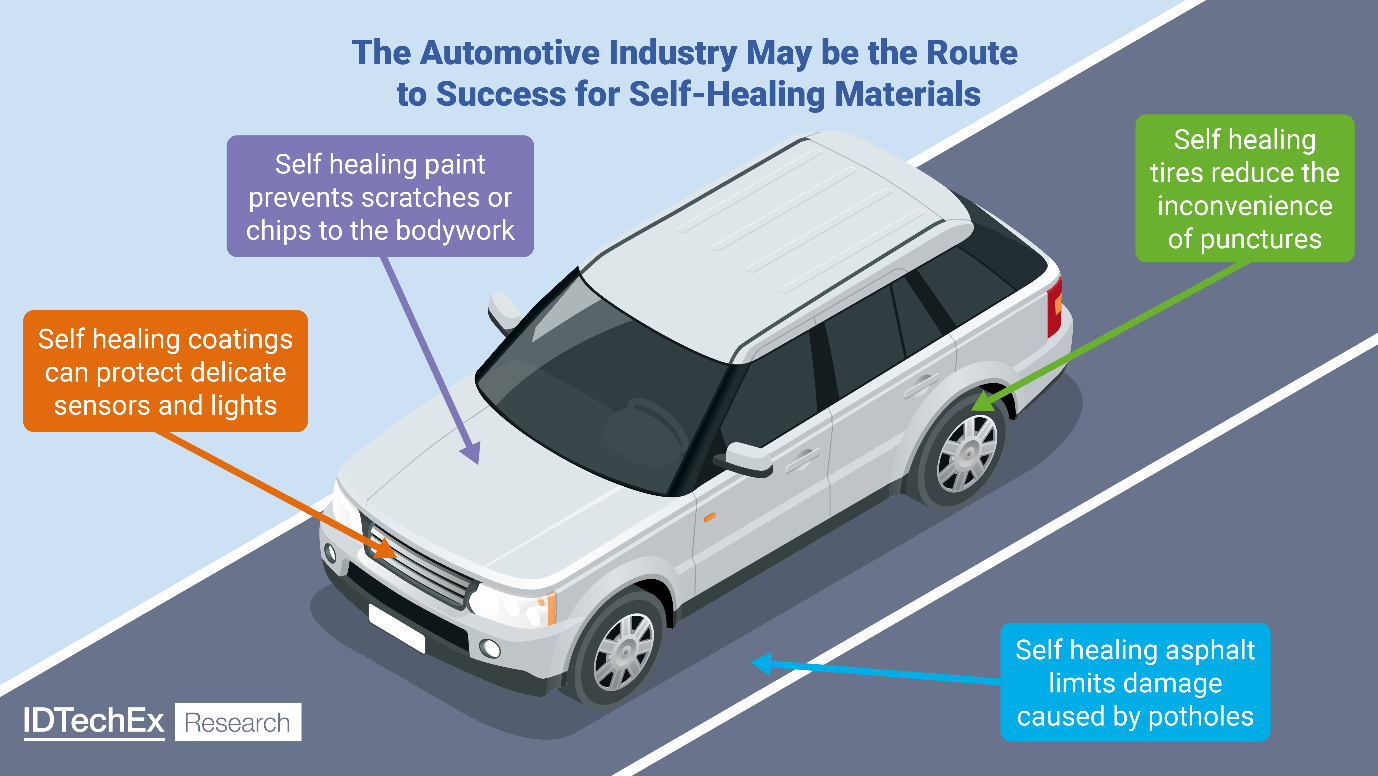
In automotive, self-healing coatings protect against chips and scratches, reducing warranty claims and enhancing resale value. Aerospace OEMs benefit from composites that withstand delamination, potentially lasting centuries. Electronics manufacturers can create flexible, puncture-resistant sensors, while construction OEMs use self-healing additives for resilient infrastructure.
Quantitatively, these materials reduce maintenance by up to 50%, lower environmental impact through reduced waste, and support circular economy goals. For instance, vitrimers enable recycling without property loss, aligning with OEM sustainability mandates.
Real-World Applications and Case Studies
Self-healing polymers are already making inroads across industries:
- Automotive: Nissan and Lamborghini have piloted self-healing paints, while Sumitomo Riko’s rubber enhances tire durability.
- Aerospace: NASA’s interest in ATSP for space suits highlights extreme environment resilience.
- Electronics: Flexible self-healing polymers for wearables, as explored by Facebook’s research groups.
- Construction: Sika’s additives repair concrete cracks, indirectly benefiting polymer-integrated structures.
A case study from NC State’s Structeryx startup demonstrates commercial viability, with aerospace OEMs adopting self-healing FRPs for reduced lifecycle costs.

Challenges and Future Outlook
Despite progress, challenges remain: high initial costs, scalability, and ensuring healing in extreme conditions. However, with market growth projected at double digits, investments are surging.
Looking ahead, integration with AI for predictive healing and bio-inspired designs will further boost durability. By 2035, self-healing polymers could become standard for OEMs, fostering maintenance-free eras in manufacturing.
Conclusion
Self-healing polymers represent a pivotal breakthrough in material durability, offering OEMs tools to build longer-lasting, more sustainable products. As innovations from 2024-2026 continue to unfold, embracing these materials isn’t just advantageous—it’s essential for staying competitive. For more insights on polymer technologies, explore our other articles on Voice of Plastic.