From Oil Shock to Polymer Crisis: The Hidden Impact of Middle East Conflict on Plastics Industry-2026
Introduction
The Silent Backbone of Modern Life Under Threat
The plastics industry does not begin on injection molding machines or extrusion lines. It begins thousands of miles away in oil fields and gas processing plants, where feedstocks are extracted, refined, and transformed into the polymers that enable modern manufacturing.
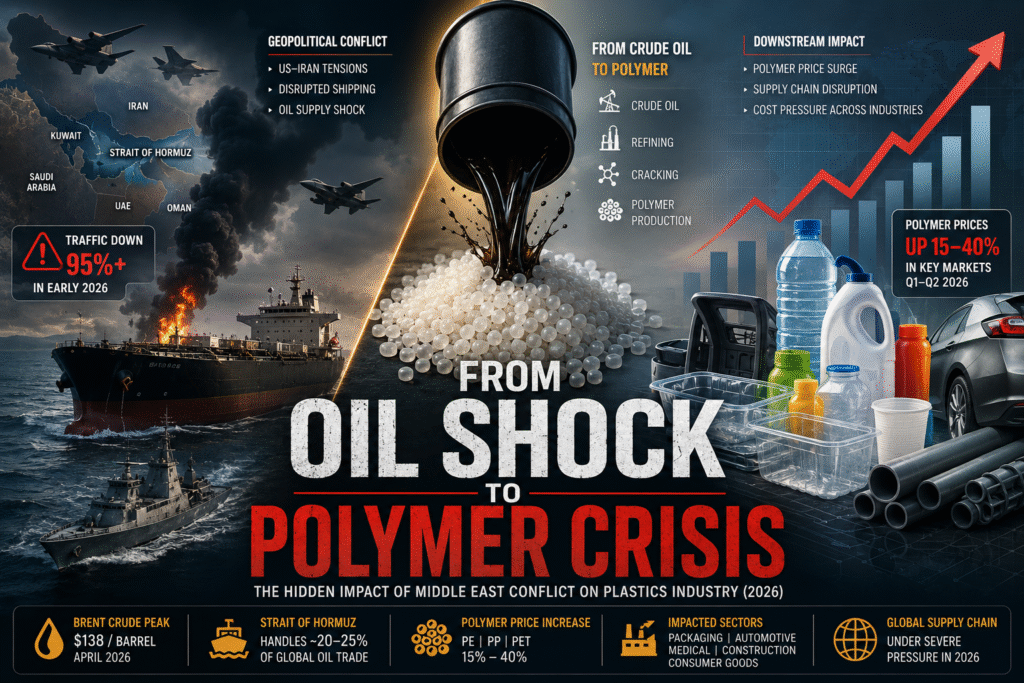
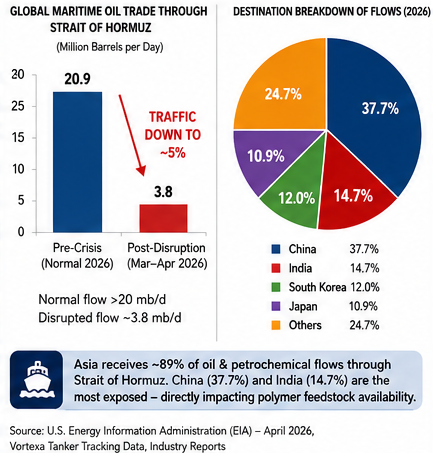
In early 2026, escalating US-Iran-Israel tensions triggered direct strikes and retaliatory actions, culminating in a near-total disruption of the Strait of Hormuz. This chokepoint, handling roughly 20-25% of global seaborne oil trade and significant LNG volumes, saw tanker traffic drop by over 95% in the following weeks.
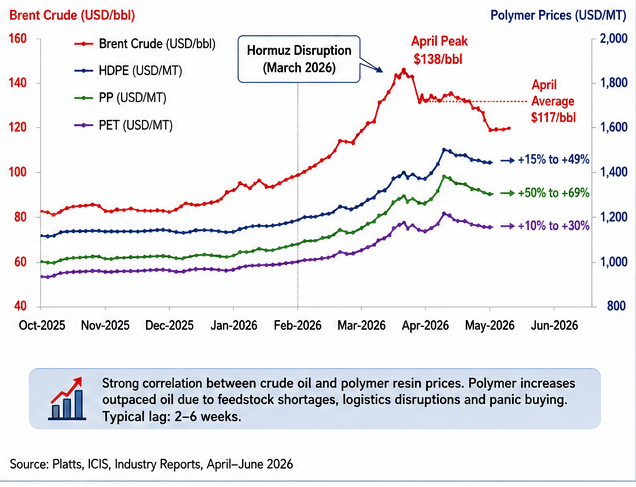
Brent crude surged from pre-conflict levels around $65-72 per barrel to peaks exceeding $138, creating an Oil Shock to Polymer Crisi that rapidly transmitted into a polymer crisis. Virgin resin prices for polyethylene (PE), polypropylene (PP), and PET climbed 15-40% in key markets within weeks, with multiple price hike announcements in a single month in some regions.
This article dissects the technical and commercial chain reaction: geopolitical conflict → oil price volatility → feedstock disruption → resin cost escalation → downstream manufacturing pressure. For plastic processors, procurement managers, and supply chain leaders, understanding these dynamics is no longer academic — it directly affects margins, contract negotiations, and strategic sourcing.
The Oil-Plastics Nexus: Why Oil Prices Dictate Polymer Costs
How Plastics Are Made from Crude Oil
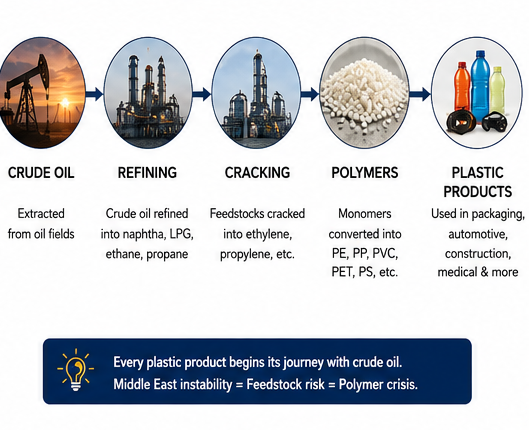
Plastics are fundamentally petrochemical products. The vast majority of polymers like polyethylene (PE), polypropylene (PP), polyethylene terephthalate (PET), and polyvinyl chloride (PVC) derive from feedstocks such as naphtha, ethane, and propane—byproducts or derivatives of crude oil and natural gas processing.
Approximately 4-8% of global oil production goes directly into plastics manufacturing, but the energy intensity of the process makes the industry highly sensitive to oil price volatility. When crude prices rise, both raw material costs and energy expenses for cracking, polymerization, and logistics surge in tandem.
Key Feedstock Pathways:
- Naphtha (from crude oil) → Ethylene and Propylene → PE and PP
- Ethane (from natural gas) → Ethylene
- Aromatics → PET and Polystyrene
This linkage means that any disruption in Middle Eastern oil flows—home to massive petrochemical hubs in Saudi Arabia, Iran, Qatar, and the UAE—translates rapidly into polymer shortages and price hike
From Oil Shock to Polymer Crisis
The transmission mechanism unfolded rapidly in Q1-Q2 2026.
Oil Price Spike: Brent averaged $117 in April, with peaks at $138. Feedstock Inflation: Naphtha prices surged, directly lifting cracker margins and monomer costs. Polymer Resin Cost Increase: PE and PP saw significant hikes; some suppliers issued multiple increases in weeks. PET followed paraxylene trends. Freight and Logistics Disruption: Longer voyages increased container and bulk chemical shipping rates. Supply Uncertainty: Panic buying and inventory hoarding exacerbated tightness.
Resin-Specific Effects:
- PE/PP: Most exposed due to Middle East export dominance.
- PET: Beverage and packaging converters faced margin compression.
- PVC/Engineering Plastics: Indirect energy and additive cost pressures.
These increases hit conversion processes: injection molders saw higher per-part costs; film extruders adjusted formulations; blow molders renegotiated contracts.
- Raw Material Price Explosion: Naphtha prices in Asia rose up to 50% or more. Polypropylene and polyethylene prices climbed sharply, with some reports of 40-80% increases in key inputs within weeks.
- Supply Shortages and Force Majeure: Petrochemical plants in the region faced reduced operations or shutdowns. Asia, heavily reliant on Middle Eastern imports, experienced acute shortages of PE and PP. Manufacturers declared force majeure, halting deliveries.
- Logistics Nightmare: Higher fuel costs, restricted shipping, and container shortages compounded issues. Freight rates spiked, adding to the cost burden for importers.
- Secondary Effects: Energy-intensive downstream processes (molding, extrusion) saw cost increases. Transportation of finished goods also became pricier
Historical Oil Shock to Polymer Crisis and Their Impact on Plastics
The current oil shock to polymer crisis situation echoes the 1973 and 1979 oil crises, triggered by Middle East conflicts and the Iranian Revolution. In 1973, OPEC’s embargo caused oil prices to fourfold, leading to plastics shortages and rationing in some sectors. The 1979 shock saw prices double amid Iranian production collapses.
In more recent memory, Russia’s 2022 invasion of Ukraine spiked energy prices, affecting European plastics production. However, the 2026 Iran-related conflict represents something larger: the largest oil supply shock in history, with initial losses around 10 million barrels per day due to disruptions of oil shock to polymer crisis in the Strait of Hormuz
Sector-Specific Devastation
Packaging Industry (Largest Consumer of Plastics): Food and beverage packaging faces severe pressure. In India, major water bottle suppliers raised prices by 11% due to 70%+ increases in packaging costs. Grocery prices, including milk, could rise due to shortages in plastic bottles, films, and caps. Hoarding and accumulating oil shock to polymer crisis shortages.
Automotive and Manufacturing: Lightweight plastic components are critical for fuel efficiency. Higher resin costs threaten margins, potentially slowing EV transitions or increasing vehicle prices.
Medical and Healthcare: Shortages of medical-grade plastics for syringes, IV bags, tubing, and protective equipment raise alarms. Biotech and lab sectors report warnings of supply disruptions for cleanroom materials.
Consumer Goods and Electronics: From toys and furniture to phone casings and appliances, costs are rising. Textiles, footwear, and cosmetics using polymer derivatives are also affected.
Construction and Agriculture: Pipes, films for greenhouses, and mulch films see price volatility, impacting infrastructure projects and food security
Global Ripple Effects: Asia Hit Hardest
Asia, importing massive volumes of Middle Eastern petrochemicals, faces a oil shock to polymer crisis.” China, India, Japan, and Southeast Asia report production cuts, with some facilities operating at reduced capacity. This oil shock to polymer crisis threatens export-oriented industries and domestic supply chains.
Europe and the US are somewhat insulated by domestic sale and alternative sources but still face higher import costs and knock-on inflation. US producers have seen demand surges as global buyers pivot.
Emerging markets suffer most due to limited alternatives and higher import dependence, potentially fueling inflation and slowing growth.
Economic and Broader Implications
- Inflationary Pressure: Plastics feed into thousands of products, amplifying CPI increases.
- Supply Chain Reconfiguration: Companies accelerate “Middle East +1” or diversification strategies, boosting investments in US, Canadian, or alternative Asian capacities.
- Sustainability Push: Higher virgin plastic prices could favor recycled materials in some cases, though low oil periods historically hurt recycling. The current high-price environment may encourage circular economy investments.
- GDP Impacts: Sectors reliant on plastics could see output declines, with estimates of broader economic drag from sustained high energy prices.
Industry Responses and Adaptation Strategies
Plastics manufacturers are:
- Seeking alternative feedstocks (bio-based where viable, though scaling is challenging).
- Optimizing production and inventory management.
- Passing costs downstream (leading to higher consumer prices).
- Investing in efficiency and recycling technologies.
- Lobbying for government interventions, such as strategic reserves or subsidies.
Governments are releasing emergency stocks and exploring demand-side measures. Long-term, this oil crisis to polymer shock may accelerate the shift toward renewable feedstocks and advanced recycling
India Perspective: How Indian Plastic Industry is Affected
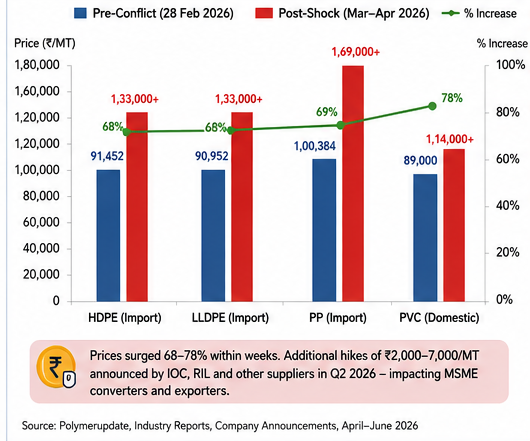
This oil shock to polymer crisis will change India’s plastics sector, valued at approximately $47 billion in 2026 and growing at around 6.14% CAGR, remains import-dependent for key polymers despite domestic expansions.
Key Vulnerabilities:
- High reliance on Middle East imports for PE, PP, and PVC.
- Rupee volatility amplified landed costs.
- MSME processors (majority of the ecosystem) faced acute margin squeezes with limited hedging ability.
- Domestic producers like Reliance and IOCL implemented hikes (e.g., PP up ₹2,000/MT, PE up ₹2,500/MT in early March).
Procurement teams shifted toward US and alternative sources, but logistics premiums limited gains. The crisis accelerated discussions on domestic capacity additions (e.g., Adani and Reliance PVC projects).
Future Outlook: Uncertainty and Opportunities
As of mid-2026, forecasts depend on conflict resolution. If disruptions ease by late 2026, prices may moderate, with Brent potentially averaging $86/bbl for the year (still elevated). Prolonged issues could push prices higher, risking recessionary pressures.
Opportunities exist for:
- Innovation in alternative materials.
- Regional supply chain resilience.
- Policy support for domestic petrochemical industries.
- Accelerated decarbonization in plastics production.
However, the crisis underscores the fragility of global interdependence on fossil fuel-derived materials.
Conclusion: A Wake-Up Call for Resilience
The journey from oil shock to polymer crisis reveals how interconnected our modern economy is. What happens in the Strait of Hormuz affects your grocery bag, medical care, and car dashboard. Businesses and policymakers must prioritize diversification, innovation, and sustainability to build resilience against future geopolitical shocks.
For industry stakeholders: Monitor feedstock indices closely, diversify suppliers aggressively, and invest in circular solutions. For consumers: Expect short-term price increases but look for brands embracing sustainable packaging.
The hidden impact is now glaringly visible. The plastics industry—and the global economy—will emerge transformed if lessons are learned.
FAQ Section
Why do oil prices affect polymer prices? Polymers derive from petrochemical feedstocks (naphtha/ethane). Feedstock costs dominate production economics, creating direct pass-through.
How does Middle East conflict affect plastics industry? Disruptions to Hormuz block ~20% of oil and key petrochemical exports, spiking prices and creating physical shortages.
Which polymers are most affected by crude oil price changes? PE, PP, and PET due to high volume and direct feedstock linkage.
How will India’s plastic industry respond? Accelerated domestic capacity builds, diversification of import sources, and greater adoption of recycled materials.
What is the link between Strait of Hormuz and polymer supply chain crisis? The strait controls export routes for major Gulf producers, directly impacting global resin availability.
Why polymer prices increase during oil shocks? Combined feedstock inflation, logistics premiums, and market psychology drive rapid repricing.
How geopolitical conflict affects plastic industry long-term? Forces investment in resilience, regionalization, and alternative feedstocks.
Will recycled plastics gain share after this crisis? Yes — higher virgin prices improve recyclate competitiveness.
Also read – US Iran conflict polymer supply chain