
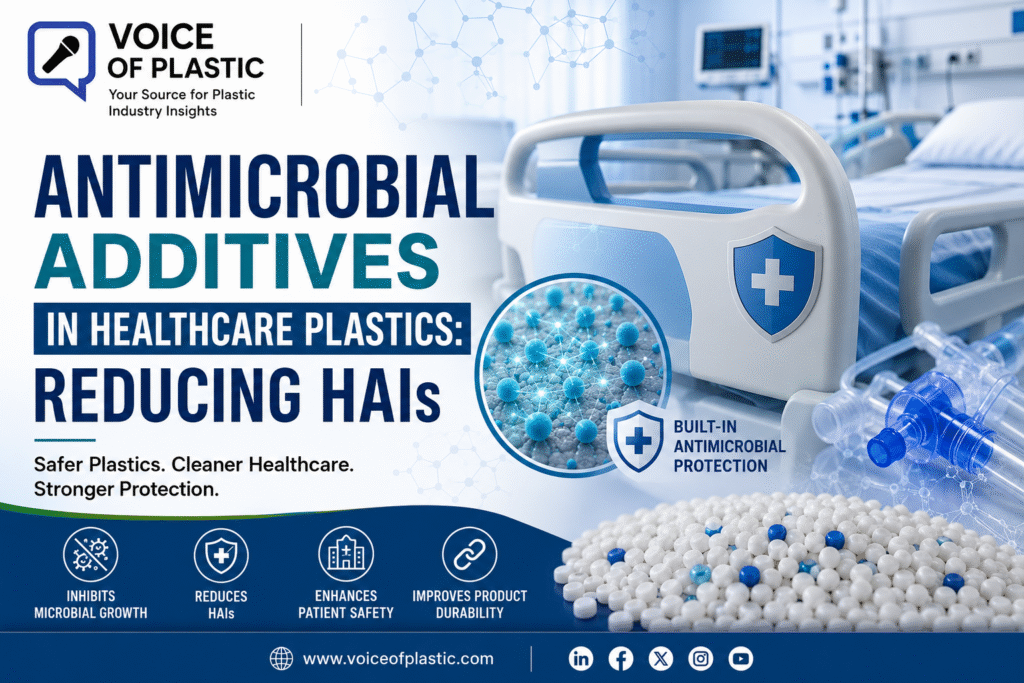
Antimicrobial Additives in Healthcare Plastics: Reducing Hospital Acquired Infections (HAIs)
Antimicrobial additives are substances added to plastic formulations to prevent or reduce the growth of microorganisms. Unlike surface coatings that may wear off, these additives are typically integrated throughout the polymer matrix for durable, long-lasting efficacy.
Introduction
Hospital-acquired infections (HAIs), also known as nosocomial infections, represent a significant challenge in modern healthcare. These infections develop in patients during their stay in hospitals or other healthcare facilities, often complicating recovery and increasing mortality risks. According to the World Health Organization, approximately 1 in 10 patients is affected by HAIs globally, with rates significantly higher in low- and middle-income countries.
Infection prevention remains a top priority for healthcare professionals. HAIs contribute to prolonged hospital stays, higher treatment costs, and the spread of antimicrobial-resistant organisms. The Centers for Disease Control and Prevention (CDC) reported over 722,000 HAIs in U.S. acute care hospitals in one key study year, leading to about 75,000 deaths.
Healthcare plastics play a vital and expanding role in this ecosystem. From disposable syringes and IV tubing to durable hospital beds and diagnostic equipment housings, medical plastics offer versatility, sterility, cost-effectiveness, and ease of manufacturing. Their lightweight nature and design flexibility make them indispensable in medical devices and healthcare settings.
Enter antimicrobial additives — specialized compounds incorporated into polymers during manufacturing to inhibit microbial growth. These antimicrobial polymer additives create antibacterial plastics that provide continuous protection against bacteria, fungi, and other pathogens on product surfaces. This article explores their science, applications, and impact on infection control in the healthcare industry
Understanding Antimicrobial Additives
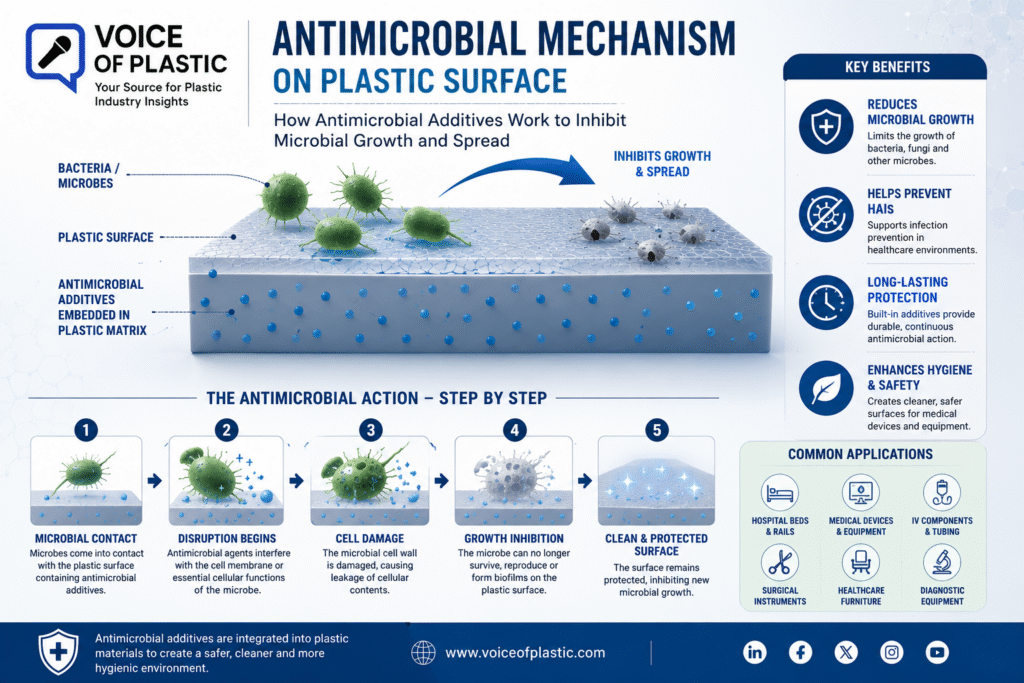
Working Mechanism
Most antimicrobial additives function by disrupting essential microbial processes. They release ions or active agents that damage cell membranes, interfere with DNA replication, or inhibit enzyme activity. This prevents bacteria from colonizing surfaces and forming biofilms — protective communities that are notoriously difficult to eradicate with standard cleaning.
Types of Antimicrobial Technologies
Several technologies dominate the market for healthcare polymer materials:
- Silver Ion: Silver-based additives release Ag+ ions that bind to bacterial cell components, disrupting metabolism and reproduction. They offer broad-spectrum activity and are widely used due to their effectiveness and relative safety profile.
- Zinc-based: Zinc compounds, such as zinc pyrithione or zinc oxide, provide antifungal and antibacterial properties. They are often cost-effective and suitable for various processing conditions.
- Copper: Copper ions damage microbial proteins and DNA. Copper-infused surfaces have shown promise in high-touch areas.
- Organic Antimicrobial Agents: These include quaternary ammonium compounds (QACs), phenolics, and isothiazolinones. They offer targeted action and can be tailored for specific polymers.
- Surface-Active Technologies: These modify surface properties to make them less hospitable to microbes, often combined with other additives for hybrid performance.(Madisongroup)
Comparison Table: Antimicrobial Additive Technologies
Technology | Spectrum | Durability | Cost | Key Advantages | Limitations |
|---|---|---|---|---|---|
Silver Ion | Broad | High | Higher | Long-lasting, effective vs. biofilms | Potential discoloration |
Zinc-based | Good | Medium | Lower | Antifungal strength, affordable | May require higher loading |
| Copper | Broad | High | Medium | Natural antimicrobial | Color impact, regulatory |
| Organic Agents | Variable | Medium | Variable | Customizable | Potential leaching |
| Surface-Active | Targeted | Variable | Medium | Reduced adhesion | Less “killing” power |
This variety allows engineers to select the optimal antimicrobial additives based on the specific polymer, application, and regulatory needs.
Healthcare Plastics That Use Antimicrobial Additives
Healthcare plastics must meet stringent requirements: biocompatibility, sterilizability, mechanical strength, and chemical resistance. Common polymers enhanced with antimicrobial plastics technologies include:
- Polypropylene (PP): Lightweight, chemically resistant, and easily molded. Ideal for medical trays, containers, and non-woven fabrics.
- Polyethylene (PE): Flexible and tough. Used in tubing, films, and packaging. High-density variants offer greater rigidity.
- ABS (Acrylonitrile Butadiene Styrene): Provides impact resistance and a smooth surface finish. Common in equipment housings and carts.
- PVC (Polyvinyl Chloride): Versatile for flexible (tubing) and rigid applications. Widely used but requires careful additive compatibility.
- Polycarbonate (PC): High clarity and impact strength. Suitable for diagnostic devices and incubators.
- TPU (Thermoplastic Polyurethane): Flexible and durable. Excellent for catheters and wearable devices.
- Silicone: Biocompatible and flexible. Used in implants, seals, and tubing.
- TPE (Thermoplastic Elastomers): Combines rubber-like properties with processability. Growing use in grips and seals.
These materials are selected for their balance of performance, cost, and compatibility with antimicrobial polymer additives. Proper dispersion ensures uniform protection without compromising mechanical properties or regulatory compliance.
How Antimicrobial Additives Reduce Hospital-Acquired Infections
Antimicrobial additives contribute to infection control through multiple mechanisms:
- Biofilm Prevention: By inhibiting initial bacterial attachment, they disrupt biofilm formation on devices and surfaces.
- Reduced Bacterial Growth: Active agents continuously suppress colony formation on healthcare plastics.
- Cleaner Surfaces: Complement cleaning protocols by providing residual protection between disinfections.
- Longer-Lasting Protection: Unlike sprays or wipes, integrated additives maintain efficacy over the product’s lifecycle.
- Lower Contamination Risks: Reduced microbial load on high-touch surfaces like bed rails, IV connectors, and trays decreases transmission.
Statistics underscore the impact. Studies on copper surfaces have shown up to 58% reduction in HAI rates in ICUs. Antimicrobial-impregnated plastics and textiles contribute to broader infection control strategies, helping lower rates of central line-associated bloodstream infections (CLABSIs), ventilator-associated pneumonia (VAP), and surgical site infections.(infectioncontroltoday)
Applications in Medical & Healthcare Plastics
Antimicrobial additives enhance a wide range of products in the healthcare industry:
Applications Table
| Application | Primary Polymers | Benefits of Additives |
|---|---|---|
| Catheters | TPU, Silicone, PVC | Reduced CLABSI risk, biofilm prevention |
| Surgical Instruments (handles/trays) | PP, ABS, PC | Sterile field maintenance |
| Hospital Beds & Rails | PP, ABS | Lower surface contamination |
| IV Connectors & Tubing | PE, PVC, TPU | Minimized hub colonization |
| Medical Trays & Packaging | PP, PE | Extended sterility |
| Wheelchairs & Mobility | ABS, TPE | Hygiene in high-touch areas |
| Diagnostic Equipment | PC, ABS | Reliable performance |
| Touch Surfaces | Various | Continuous protection |
| Patient Monitoring Devices | PC, TPU | Reduced cross-contamination |
These integrations make medical plastics more effective tools in daily clinical practice
Strategic Case Study: Antimicrobial PP Medical Carts in a Mid-Sized Hospital
Challenge: A 300-bed regional hospital faced persistent HAIs linked to contaminated mobile medical carts used for medication distribution and patient monitoring. Standard polypropylene carts harbored biofilms despite rigorous cleaning, contributing to elevated MRSA and other pathogen transmission rates.
Material Selection: Engineers selected medical-grade PP compounded with silver-ion antimicrobial additives at 0.5-1% loading via masterbatch. The formulation maintained impact strength, chemical resistance to disinfectants, and FDA/ISO compliance.
Manufacturing Process: Injection molding at optimized temperatures (200-240°C) ensured excellent dispersion. Parts underwent rigorous validation, including leachability and efficacy testing per ISO 22196 (antibacterial activity).
Results: Post-implementation monitoring over 18 months showed a 45% reduction in cart-related contamination incidents. Surface swab tests indicated >99% bacterial reduction. Overall facility HAI rates dropped by approximately 22% in relevant wards, aligning with broader infection control initiatives.
Cost-Benefit Analysis: Initial material cost increased by 15-20%, but reduced cleaning labor, fewer replacement carts, and lower HAI treatment costs (estimated $20,000+ per case) yielded a payback period under 14 months. Patient outcomes improved, enhancing hospital reputation.
Lessons Learned: Early collaboration between material suppliers, manufacturers, and clinicians is essential. Thorough dispersion testing prevents hotspots, and ongoing efficacy monitoring validates long-term performance. This case highlights how targeted use of antimicrobial additives delivers measurable ROI in real-world healthcare plastics applications.
Manufacturing Considerations
Incorporating antimicrobial additives requires careful process control:
- Masterbatch Selection: Use pre-dispersed masterbatches compatible with the base resin for uniform distribution.
- Processing Temperatures: Maintain within polymer limits to avoid degrading the additive (e.g., silver stability up to 300°C in many systems).
- Injection Molding & Extrusion: Optimize screw design, back pressure, and cycle times for homogeneous mixing without agglomeration.
- Dispersion Quality: Employ twin-screw compounding and verify via microscopy or efficacy testing.
- Additive Loading: Typically 0.1-2% depending on technology and requirements. Overloading can affect mechanical properties or cause blooming.
- Regulatory Compliance: Adhere to FDA 21 CFR, ISO 10993 biocompatibility, and relevant USP standards. Validation includes cytotoxicity, sensitization, and antimicrobial efficacy.
- Testing: Conduct accelerated aging, sterilization compatibility (ETO, gamma, autoclave), and real-world microbial challenge studies.
Benefits
The advantages of antimicrobial plastics extend across stakeholders:
- Better Hygiene: Proactive microbial control supplements manual cleaning.
- Lower Maintenance: Surfaces stay cleaner longer, reducing labor.
- Longer Product Life: Reduced degradation from microbial attack.
- Patient Safety: Fewer HAIs translate to better outcomes.
- Brand Value: Demonstrates commitment to innovation and safety.
- Cost Savings: Lower infection rates and extended product durability offset higher upfront costs.
Challenges
Despite benefits, adoption faces hurdles:
- Cost: Premium additives increase material expenses.
- Regulatory Approvals: Lengthy testing and documentation for medical claims.
- Material Compatibility: Potential impacts on clarity, color, or mechanical properties.
- Color Changes: Some metal ions can cause discoloration over time.
- Processing Limitations: Narrow processing windows for certain additives.
- Environmental Considerations: End-of-life disposal, potential leaching, and development of resistant strains require responsible innovation.
Future Trends
The field of antimicrobial additives is evolving rapidly:
- Nanotechnology: Nanoparticles enhance efficacy at lower loadings with targeted release.
- Smart Antimicrobial Polymers: pH- or light-responsive systems that activate only when needed.
- Sustainable Additives: Biobased and biodegradable options from natural sources.
- AI-Assisted Infection Monitoring: Integrated sensors in healthcare plastics for real-time alerts.
- Self-Disinfecting Surfaces: Advanced coatings and intrinsic polymer modifications.
These trends promise more effective, eco-friendly healthcare polymer materials.
Conclusion
Antimicrobial additives represent a powerful tool in the fight against hospital-acquired infections. By integrating these technologies into healthcare plastics and medical devices, the industry can achieve significant gains in infection control, patient safety, and operational efficiency. As antimicrobial plastics continue to advance, they will drive the future of safer, more resilient healthcare environments.
The opportunities for innovation are immense. Manufacturers, clinicians, and material scientists should collaborate to develop next-generation solutions tailored to evolving challenges. Explore advanced antimicrobial material solutions today to elevate your infection prevention strategies and contribute to a healthier tomorrow.
Call to Action: Contact specialized suppliers or consult with medical plastics engineers to assess how antimicrobial additives can enhance your product portfolio or facility protocols.
FAQs
Q1: What are antimicrobial additives in healthcare plastics? A: They are compounds incorporated into polymers like PP or TPU to inhibit bacterial growth, providing continuous surface protection.
Q2: How effective are antimicrobial plastics against HAIs? A: They significantly reduce microbial load and complement cleaning protocols, with studies showing notable drops in contamination and infection rates.
Q3: Which polymers are best for antimicrobial additives? A: PP, PE, ABS, PVC, PC, TPU, and silicone are commonly used due to their versatility and compatibility.
Q4: Are there regulatory requirements? A: Yes, products must meet FDA, ISO 10993, and other standards for biocompatibility and efficacy claims.
Q5: What is the future of antimicrobial healthcare plastics? A: Nanotechnology, smart materials, and sustainable options will drive more intelligent, effective infection control solutions.
Reference Suggestions:
Also Read