
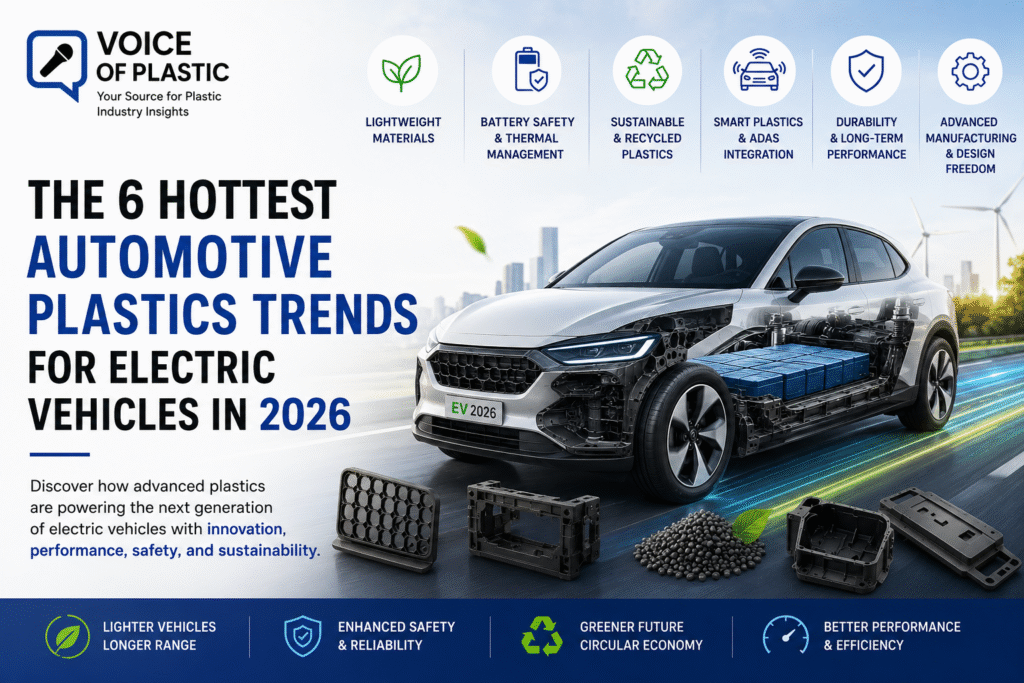
Trend 1: Advanced Lightweighting for Extended Range and Performance in electric vehicles
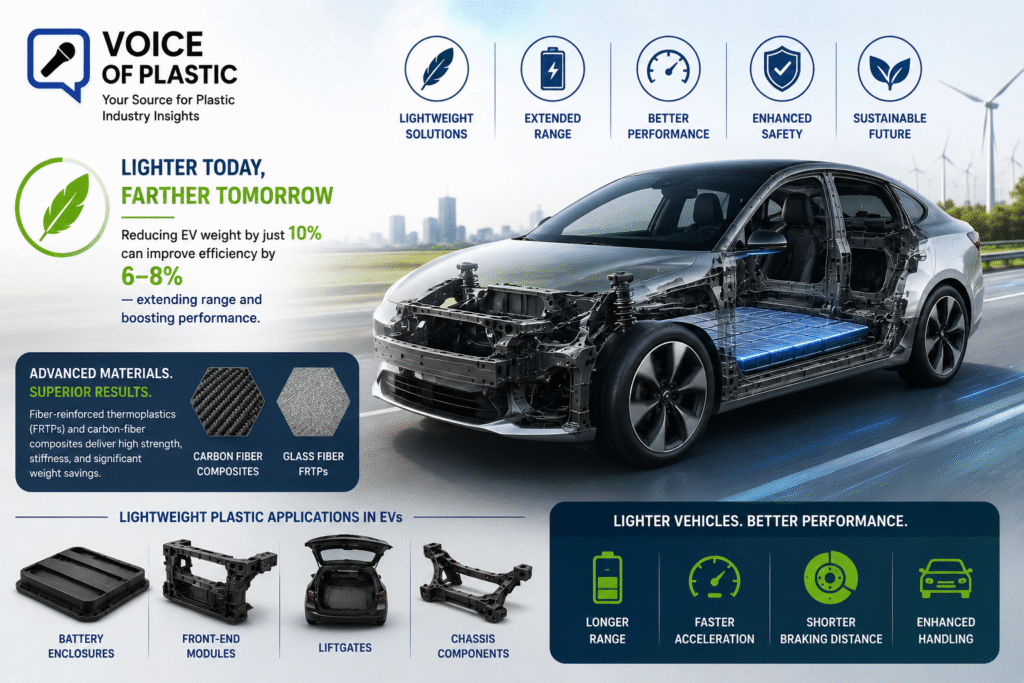
The Imperative for Lightweight Construction in electric vehicles
For every electric vehicle, weight is the enemy of range. The heavier the car, the more energy is required to move it, directly impacting how far it can travel on a single charge. With the battery pack representing a significant portion of an electric vehicles’s total mass, offsetting this weight is a top priority for Original Equipment Manufacturers OEMs. Reducing overall vehicle weight by just 10% can improve efficiency by 68%, a crucial margin in the competitive electric vehicles market. This has made advanced lightweighting more than a trend; it’s a fundamental engineering principle for all-electric and plug-in hybrids.
Fiber-Reinforced Thermoplastics FRTPs and Composites: The New Standard in electric vehicles
To achieve aggressive weight reduction targets, the automotive industry is rapidly moving beyond conventional steel and aluminum for many components. Fiber-reinforced thermoplastics FRTPs and carbon-fiber composites are becoming the new standard for structural and semi-structural applications. These materials combine lightweight polymer matrices (like polypropylene or polyamide) with reinforcing fibers (such as glass or carbon) to create components that are significantly lighter than their metal equivalents while offering comparable or even superior strength and stiffness. By 2026, we will see FRTPs used extensively in battery enclosures, front-end modules, liftgates, and even chassis components.
Impact on electric vehicles Performance: From Range to Acceleration
The benefits of lightweighting extend far beyond just extending battery range. A lighter electric vehicle is inherently more agile and responsive. It accelerates faster, brakes in a shorter distance, and offers improved handling dynamics, contributing to a more engaging driving experience. By replacing heavy metal parts with engineered plastic components, OEMs can improve the overall performance profile of their cars, making them not only more efficient but also more enjoyable to drive—a key factor in winning over consumers transitioning from traditional internal combustion engine vehicles
Trend 2 Engineering Plastics for electric vehicles Battery Safety and Thermal Management
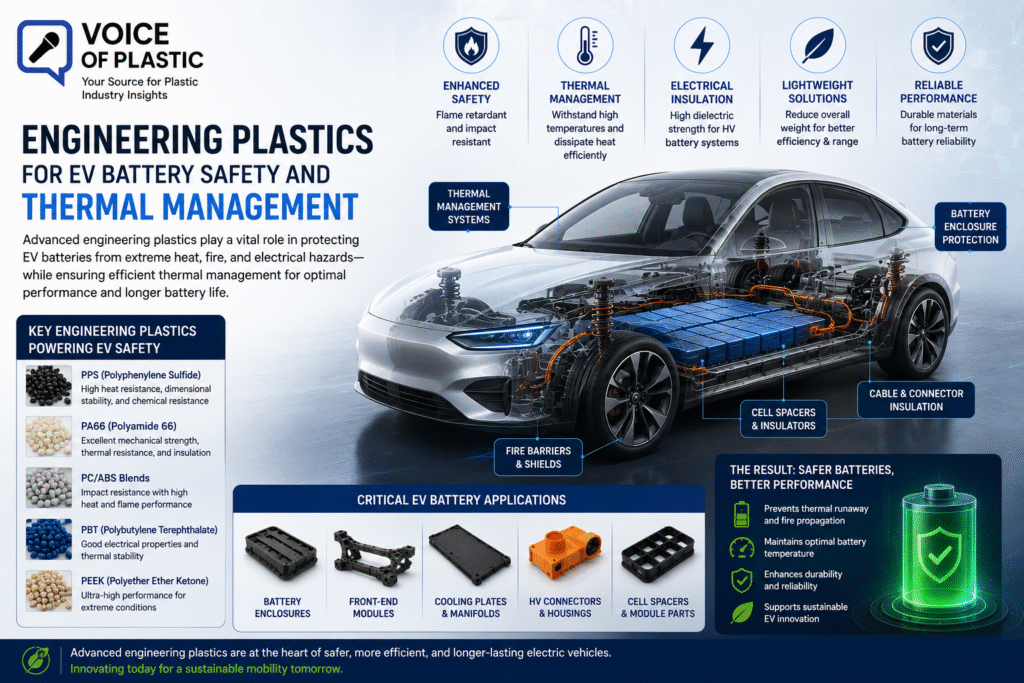
The Critical Role of Plastics in electric vehicles Battery Technology
The battery is the heart of any electric vehicle, and ensuring its safety and optimal performance is non-negotiable. This high-voltage system requires robust protection from physical impacts, fire, and thermal runaway. Engineering plastics offer a unique combination of properties perfectly suited for this demanding environment: high dielectric strength for electrical insulation, inherent flame retardancy, and exceptional impact resistance, all within a lightweight package.
Advanced Battery Enclosures for Enhanced Protection and Impact Resistance
The battery enclosure, which houses and protects the delicate battery cells, is a critical safety component. By 2029, advanced plastic composites will increasingly replace heavy metal housings. These composite enclosures provide excellent crash protection, absorbing and distributing impact energy to protect the battery module’s integrity. Furthermore, specialized flame-retardant plastics are being engineered to contain potential thermal events, preventing propagation between cells and enhancing overall vehicle safety.
Innovators like Tesla have long championed composite-intensive battery pack designs, a trend the entire automotive industry is now adopting.
Plastics in Thermal Management Systems
Effective thermal management is vital for battery longevity, performance, and charging speed. Plastics play a crucial role here, too. Thermally conductive polymers are used in cooling channels, heat sinks, and gap fillers to efficiently dissipate the heat generated during charging and discharging. At the same time, plastics serve as excellent thermal insulators where needed, helping to maintain the battery at its optimal operating temperature in both hot and cold climates. This precise control, enabled by versatile plastic components, is key to maximizing the battery’s lifespan and efficiency.
Future-Proofing Battery Systems: Focus on 4680 Battery Cells and Sodium Ion Battery Technology
As battery technology evolves, so must the plastics that support it. The trend towards larger cylindrical cells, like Tesla’s 4680 format, demands new plastic holders, spacers, and cooling system components designed for the new form factor. Looking further ahead, emerging technologies like sodium-ion batteries, which operate at different thermal
thresholds, will require a new generation of engineered polymers optimized for their unique
chemistry, ensuring plastics remain a core enabler of future battery innovation
Trend 3 The Circular Economy: Sustainable and Recycled Plastics for electric vehicles
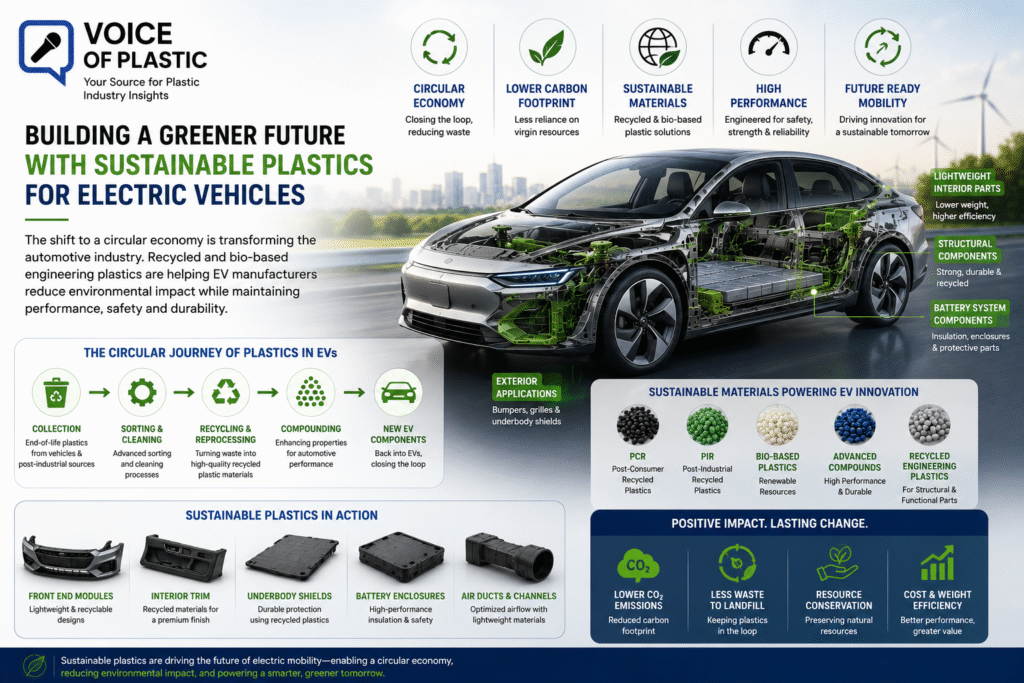
Driving Sustainability in Automotive Manufacturing
The promise of the electric vehicle is a cleaner, more sustainable future. However, true sustainability extends beyond tailpipe emissions to the entire manufacturing process and vehicle lifecycle. In response, the automotive industry is aggressively embracing the principles of the circular economy, aiming to minimize waste, reduce carbon footprints, and maximize resource efficiency. Sustainable materials are no longer a niche interest but a core strategic imperative for OEMs.
Integration of Recycled Materials and Bio-Based Plastics
A major trend for 2026 is the significant increase in the use of recycled plastics and bio-based polymers in EV components. Automakers are incorporating post-consumer recycled
PCR) and post-industrial recycled PIR) materials into everything from wheel arch liners and bumpers to interior fabrics and dashboards. Simultaneously, innovation in bio-based plastics—derived from renewable sources like corn, sugarcane, or castor oil—is providing viable, lower-carbon alternatives to fossil-fuel-based polymers for a range of non-structural parts.
Design for Recyclability and Life Cycle Assessments LCAs
The circular economy is also influencing vehicle design from the very beginning. Engineers are now focused on “design for recyclability,” selecting materials and designing components that can be easily disassembled, sorted, and recycled at the end of the vehicle’s life. This involves using fewer types of plastic, avoiding difficult-to-separate composite materials where possible, and clearly labeling parts. Comprehensive Life Cycle Assessments LCAs are becoming standard practice, allowing OEMs to quantify the environmental impact of a component—from raw material extraction to end-of-life recycling—and make more sustainable material choices.
OEMs and Supply Chains Embracing Sustainable Practices
This shift is creating a ripple effect across global supply chains. OEMs are setting ambitious targets for recycled content in their new cars and demanding greater transparency from their suppliers. This is driving investment in advanced recycling technologies and fostering new partnerships to create closed-loop systems where plastic from end-of-life vehicles is reclaimed and repurposed into new automotive components.
Trend 4 Plastics for electric vehicles Powertrain Efficiency and Charging Infrastructure
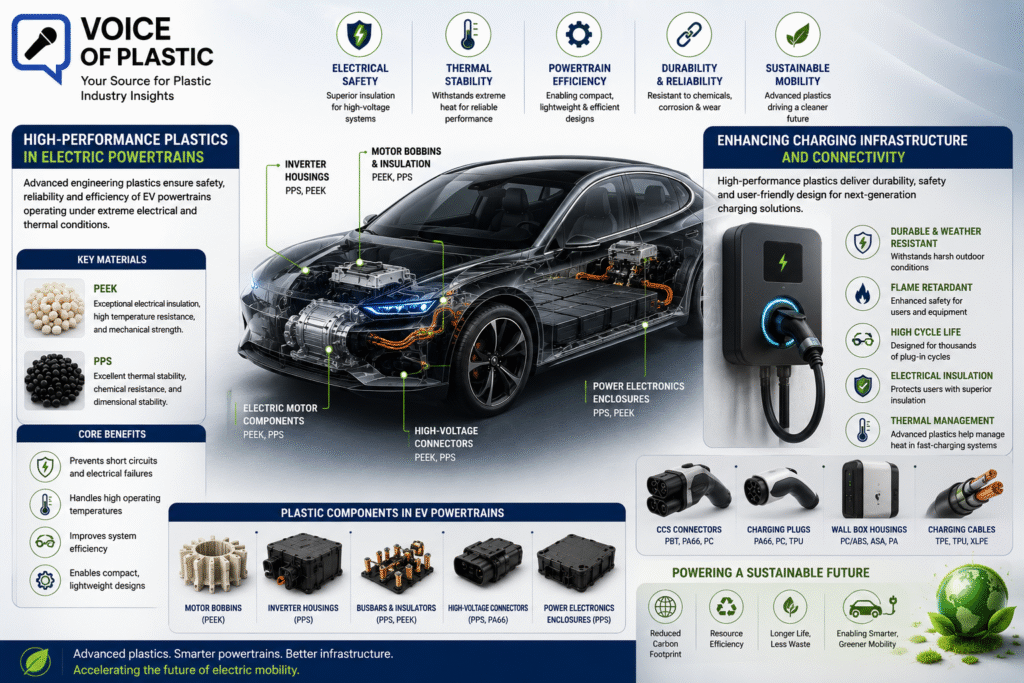
High-Performance Plastics in Electric Powertrains(electric vehicles)
The electric powertrain—electric vehicles comprising the motor, inverter, and power electronics—operates under extreme conditions of high voltage and thermal stress. High-performance engineering plastics like PEEK and PPS are essential for ensuring the safety, reliability, and efficiency of these core systems. These materials provide superior electrical insulation to prevent short circuits, high thermal stability to withstand operating temperatures, and excellent chemical resistance. They are used for critical components like motor bobbins, inverter housings, busbars, and high-voltage connectors, contributing to more compact and efficient powertrain designs.
Enhancing Charging Infrastructure and Connectivity
The usability of an electric vehicles is directly linked to its charging experience. Plastics are fundamental to creating durable, safe, and user-friendly charging infrastructure. The charging connectors, plugs, and wall boxes are almost exclusively made from robust, weather-resistant, and flame-retardant polymers that can withstand thousands of connection cycles and exposure to the elements. These materials ensure electrical insulation for user safety while being lightweight and ergonomically designed. As charging speeds increase, plastics with enhanced thermal conductivity will be crucial for managing the heat generated in charging cables and connectors.
Trend 5 Enhancing electric vehicles Safety and Durability with Advanced Plastics
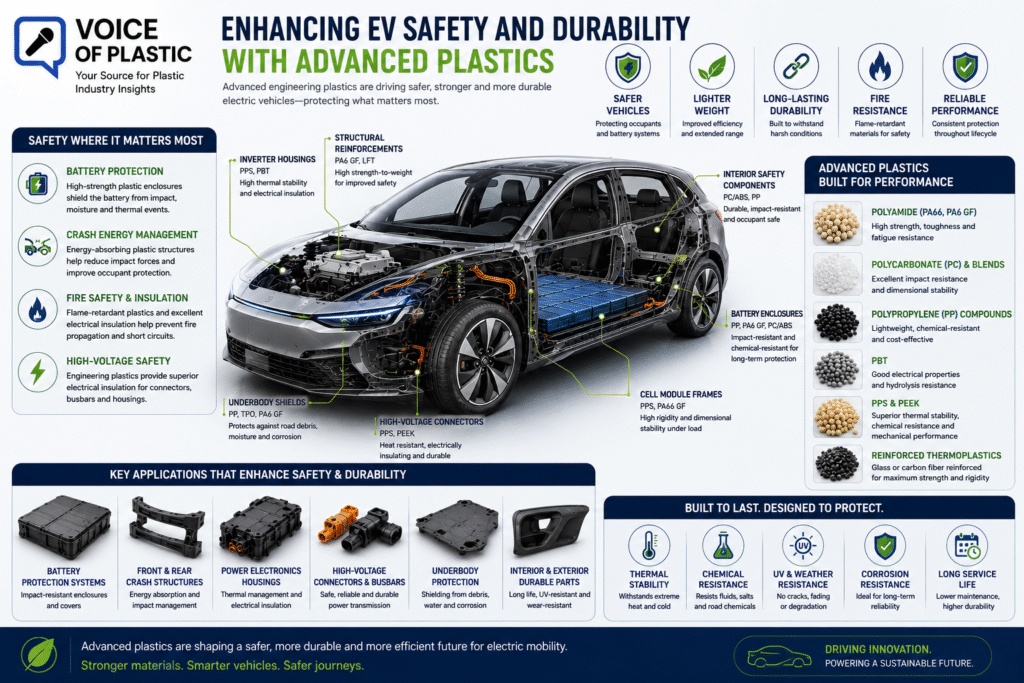
Beyond Lightweighting: Plastics in Passive Safety Systems
While lightweighting is a primary driver, advanced plastics are also a cornerstone of modern electric vehicles safety systems. Their remarkable ability to deform and absorb energy upon impact makes them ideal for passive safety applications. Unlike metal, which can permanently deform or tear, polymer composites can be engineered to crush in a controlled, predictable manner, dissipating kinetic energy and reducing the forces transferred to the vehicle’s occupants during a collision.
Crashworthiness and Energy Absorption
This property is leveraged in numerous safety-critical components. Front and rear bumper systems, door structures, and front-end carriers are increasingly made from energy-absorbing plastic foams and composites. These plastic structures act as the electric vehicles first line of defense in a crash, significantly improving the crashworthiness of the entire vehicle structure and providing vital protection for both occupants and the high-voltage battery.
Pedestrian Protection and Exterior Durability
Plastic’s design flexibility also plays a key role in pedestrian safety. Front bumpers and hoods made from plastics can be shaped to be more “forgiving” upon impact with a pedestrian, reducing the severity of injuries. Beyond safety, advanced exterior plastics offer superior durability. Modern polymer formulations for body panels, claddings, and trim provide excellent resistance to dents, scratches, and corrosion, maintaining the electric vehicles aesthetic appeal over its lifetime and reducing repair costs
Trend 6 Plastics Enabling Advanced Driver-Assistance Systems ADAS) and Autonomous Driving
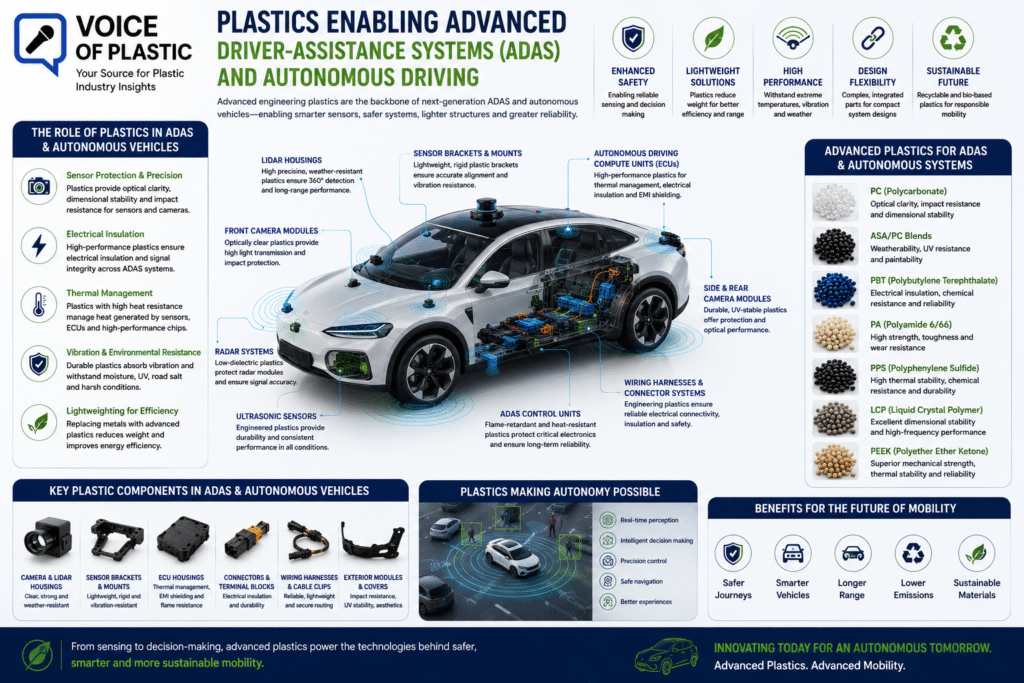
The Interplay of Plastics and Smart Technology in electric vehicles
Electric vehicles are technology platforms on wheels, packed with an ever-growing suite of sensors that form the basis of Advanced Driver-Assistance Systems ADAS) and the progression toward full autonomy. This sensor ecosystem, which includes radar, LiDAR, cameras, and ultrasonic units, relies heavily on specialized plastics for both protection and optimal performance.
Lightweight and Protective Housings for Sensors and AI Systems
Each sensor requires a housing that protects it from the harsh automotive environment—including moisture, dirt, and impacts—without interfering with its function. Plastics are the ideal material, offering lightweight protection and the ability to be molded into the precise, complex geometries required for these sensitive electronic components. The material choice is critical; for example, radar sensors require a plastic cover (or “radome”) that is transparent to radar frequencies, a property that specialized polymers can provide.
Integrated Design for Enhanced Functionality
By 2026, the trend will be toward greater integration. Instead of having discrete sensor “bumps,” automakers are using plastics to seamlessly integrate sensors into grilles, bumpers, and even emblems. This is made possible by “signal-transparent” plastics that can be painted or finished to match the electric vehicles body while allowing sensor waves to pass through unimpeded. This creates a cleaner, more streamlined aesthetic while ensuring the advanced safety systems function flawlessly